💡 1분 핵심 요약 (Quick Summary)
What official guides don't tell you about Seoul transit passes. Honest review of the WOWPASS dual balance trap and Climate Card boundary limits.
The Ultimate Seoul Transit Showdown: What the Official Guides Don’t Tell You
To be completely honest with you, before I landed in Seoul, I thought I had everything figured out. I watched all the perfectly edited YouTube guides, read the official tourism blogs, and decided I was going to breeze through the subway turnstiles like a local.
Spoiler alert: I didn’t.
If you’re tearing your hair out trying to decide between the WOWPASS and the Climate Card (기후동행카드) for your upcoming trip, you’re not alone. But there are a few massive “gotchas” that the official marketing materials conveniently leave out. Let’s get real about what it’s actually like to use these cards on the ground.
The WOWPASS “Dual Balance” Trap
Picture this: You just landed at Incheon Airport. You scan your passport at the bright orange WOWPASS kiosk, load $100 USD into it, and get your shiny new card. You feel like a genius. You strut down to the subway, tap your card at the turnstile, and—BEEP BEEP BEEP. A giant red ‘X’ flashes on the screen.
I was standing there blocking the line during rush hour, utterly confused.
Here’s what they don’t emphasize enough: The WOWPASS has two completely separate balances.
- The Prepaid Debit Balance (where your $100 went, used for shopping and cafes).
- The T-Money Transit Chip (used for buses and subways).
Your foreign currency only goes to the debit balance. To ride the subway, you still have to walk up to a separate ticket machine and feed it physical Korean Won (KRW) to load the T-Money chip. It completely defeats the purpose of an “all-in-one” card if you still have to carry around cash just to take the train.
The Climate Card’s Invisible Border
So, you might be thinking, “Okay, I’ll just get the unlimited Climate Card! $15 for a 5-day pass? That’s a steal!”
And it is—until you accidentally cross the invisible border.
I learned this the hard way on a day trip. The Climate Card covers unlimited rides only within the Seoul municipal boundaries. If you decide to visit a cafe in Gyeonggi-do, take the fancy Shinbundang Line, or ride the AREX Express, your card suddenly becomes a useless piece of plastic.
When you reach your destination outside the zone, the exit turnstile won’t open. You have to do the walk of shame over to the station attendant’s booth, try to communicate through a translation app, and—you guessed it—pay a penalty fare in cash. If you only brought your Climate Card and Apple Pay, you’re going to have a very bad time.
The Great Irony of Korea’s “Cashless” Society
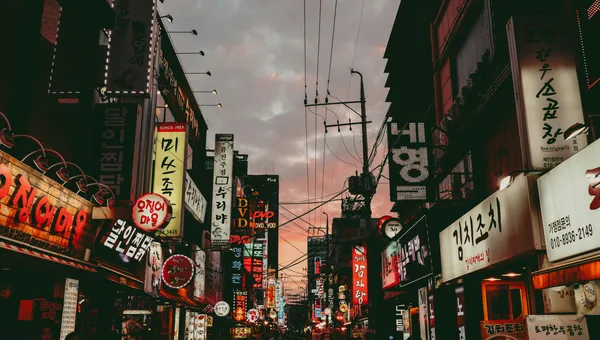
Don’t let the photos fool you; Seoul is largely a cashless city… for locals. Koreans tap their phones or credit cards for everything from $1 coffees to taxi rides.
But for tourists? We’re stuck in a bizarre time warp. Whether you’re trying to top up the T-Money chip on your WOWPASS or buy a Climate Card at a subway machine, you absolutely need physical KRW cash. The kiosks simply do not accept international credit cards for transit reloads.
The Verdict: Which one should you actually buy?
I promised no robotic comparisons, but let’s break it down simply so you don’t repeat my mistakes:
- Get the WOWPASS if: You hate carrying heavy coins from shopping and want a debit card for restaurants. Just remember you still need to bring cash to top up the transit side.
- Get the Climate Card if: You are spending 3-5 days doing heavy, exhausting sightseeing strictly inside central Seoul (think Myeongdong, Hongdae, Gangnam) and taking the subway 4+ times a day.
- Get a standard T-Money card if: You’re traveling outside of Seoul (like Busan or Jeju), don’t care about unlimited daily rides, and just want the most foolproof, nationally accepted transit pass.
At the end of the day, neither card is perfect. Just make sure you hit an ATM at the airport, because in this hyper-modern, tech-obsessed city, cash is still the only way you’re getting on the train.